

Important terms
Maqbara / Maqbarah → tomb or burial monument
Mausoleum → monumental tomb
Cenotaph → symbolic grave or memorial grave, generally above ground
Actual grave → burial chamber, generally below the cenotaph
This distinction is particularly important in Mughal architecture.
SULTAN GHARI
- Built: 1231 CE
- Builder: Iltutmish
- Commemorates: Prince Nasiruddin Mahmud, son of Iltutmish
- Location: Delhi
- It is associated with the early Delhi Sultanate.
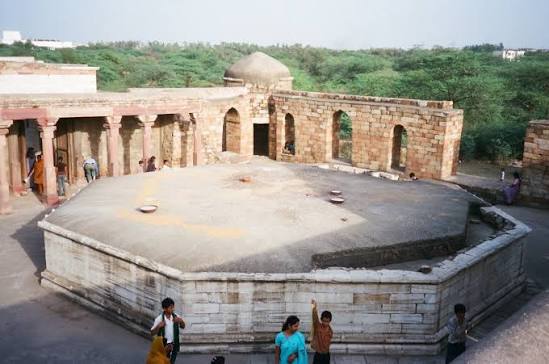
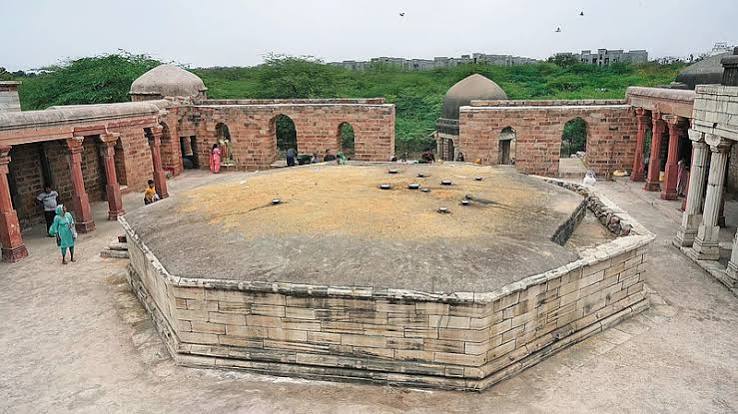
Sultan Ghari is generally regarded as the first Islamic mausoleum in India.
It has a distinctive underground burial chamber.
Its burial chamber is octagonal.
Remember
Sultan Ghari → Iltutmish → Nasiruddin Mahmud → 1231 → Octagonal underground chamber
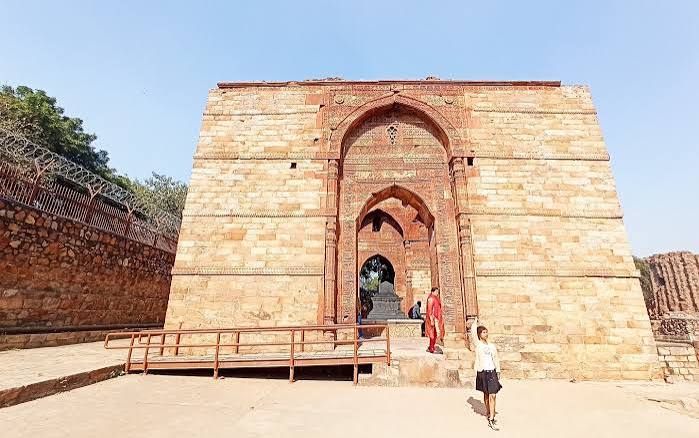
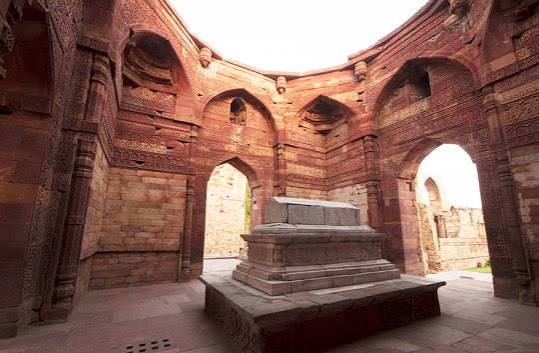
TOMB OF ILTUTMISH
- Built: c. 1235 CE
- Location: Qutb Complex, Mehrauli, Delhi
- Ruler: Iltutmish
- Iltutmish himself commissioned his tomb.
The tomb is one of the earliest surviving monumental tombs of the Delhi Sultanate.
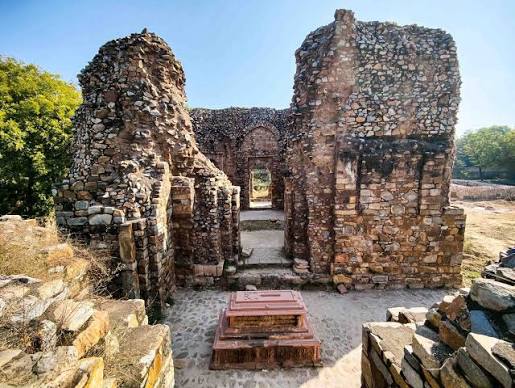
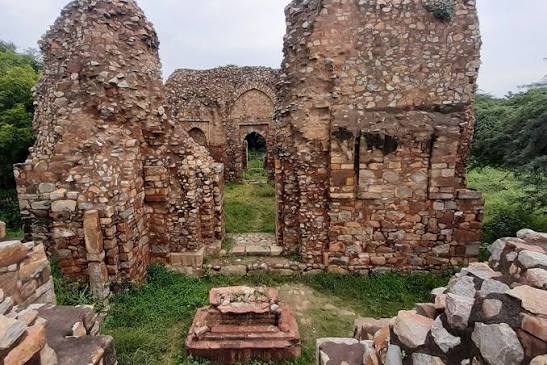
TOMB OF BALBAN
Location
Mehrauli Archaeological Park, Delhi
The Tomb of Balban is extremely important for the history of Indo-Islamic structural architecture.
It is traditionally regarded as the first Indian building to use the true arch.
True Arch
A true arch uses wedge-shaped voussoirs arranged around the curve so that the structural load is properly transferred.
This was an important development from earlier methods of constructing arches.
TOMB OF GHIYASUDDIN TUGHLAQ
- Ruler: Ghiyasuddin Tughlaq
- Dynasty: Tughlaq
- Location: Delhi
- Period: 1325 CE
Architectural features
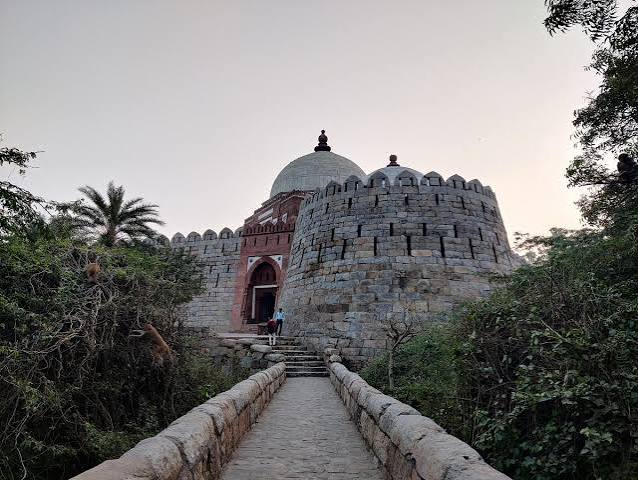
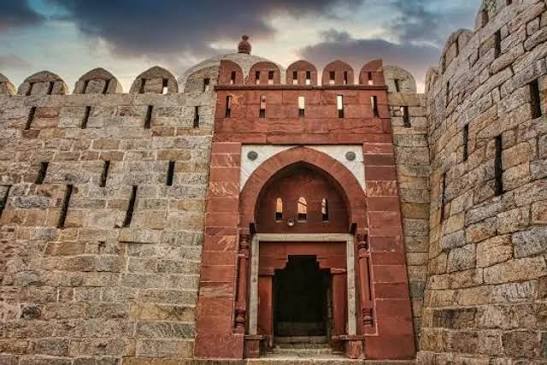
1. Sloping/battered walls
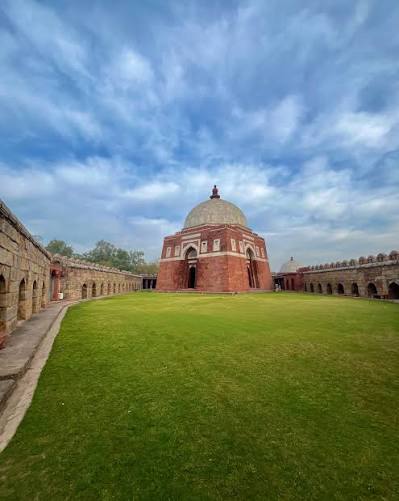
The tomb has sloping walls, giving it a massive and fortress-like appearance.
2. Red sandstone and marble
The structure combines:
- red sandstone
- marble decorative elements
3. Fortress-like appearance
Tughlaq architecture is known for:
- austerity,
- strength,
- massive construction,
- sloping walls,
- limited ornamentation.
Remember
Ghiyasuddin Tughlaq → Sloping walls → Massive/fortress-like tomb
TOMB OF SIKANDAR LODI
- Ruler: Sikandar Lodi
- Dynasty: Lodi
- Location: Delhi
- Date: c. 1517–1518
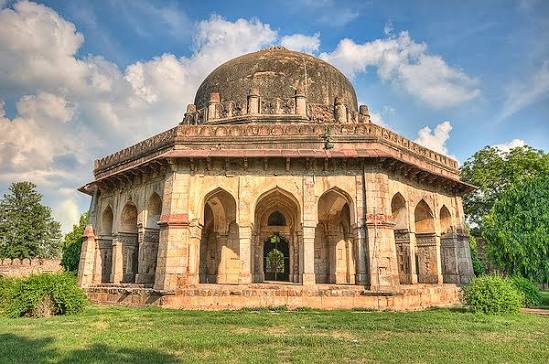
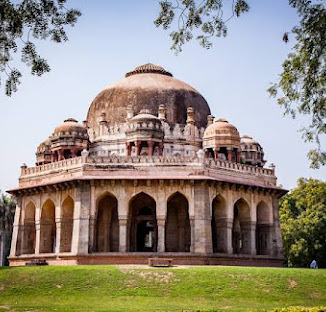
Most important feature
Double Dome
The tomb of Sikandar Lodi is generally regarded as the earliest surviving example of the double-dome in India.
The double dome consists of:
- an inner dome
- an outer dome
with a space between them.
Why was a double dome used?
It allowed architects to:
- create a larger external dome,
- maintain a proportionate interior,
- create a more impressive exterior profile.
Tombs of The Mughal period
The Mughal period is regarded as one of the most important phases in the development of Indian architecture. Mughal rulers introduced and developed several architectural traditions, particularly the use of large domes, garden tombs, arches, decorative marble work, pietra dura, symmetrical layouts and elaborate funerary complexes. The tombs built during this period not only commemorate emperors and members of the royal family but also reflect the changing character of Mughal architecture from the early Mughal period to the later period.
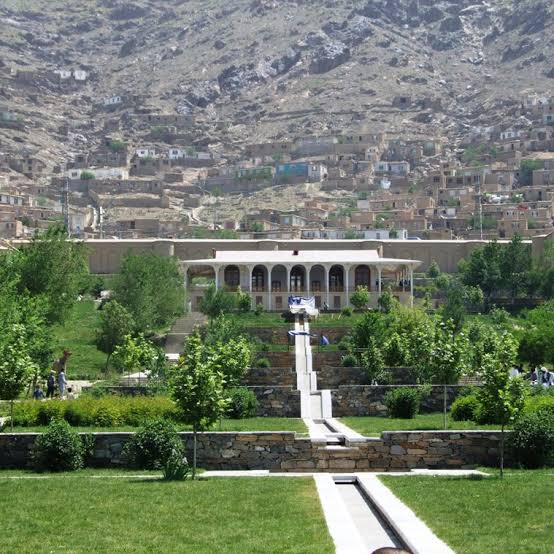
Bagh-e-Babur
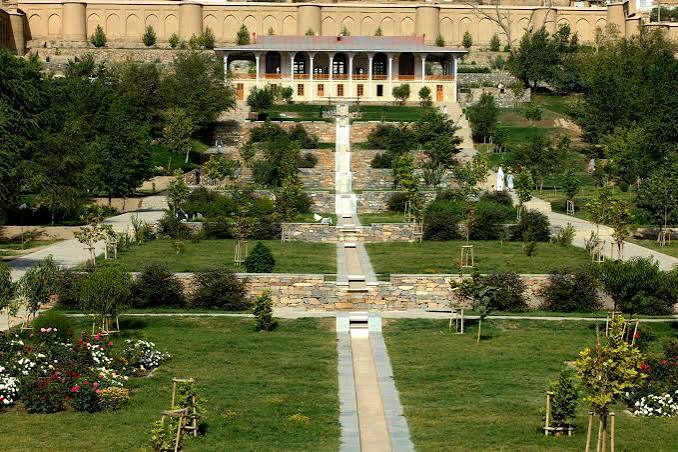
Bagh-e-Babur, located in Kabul, Afghanistan, is traditionally associated with the burial of the first Mughal emperor, Babur. Babur captured Kabul in 1504 and subsequently developed the garden. He expressed a desire to be buried at this location. Babur is buried at KABUL. He died at Agra in December 1530 and was buried there at first, but his remains were afterwards carried to Kabul in keeping with his own wish, to the terraced hillside garden known ever since as the Bagh-e-Babur — sources differ on exactly when the transfer was made. The site was further developed by later Mughal rulers, and Shah Jahan added a marble screen around the tombs in 1638.
Humayun’s Tomb
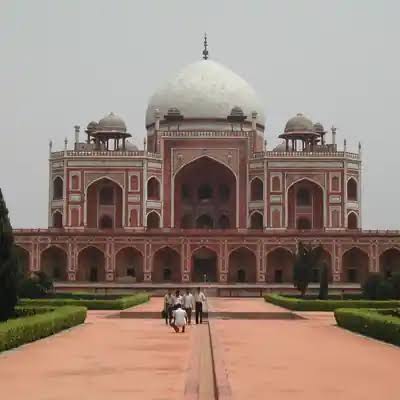
Humayun’s Tomb is located in Delhi and was commissioned by Bega Begum, (by his widow Hamida Banu Begum) also known as Haji Begum, the chief consort of Humayun. The construction was commissioned in 1558 and the tomb was designed by the Persian architect Mirak Mirza Ghiyas, along with his son Sayyid Muhammad.
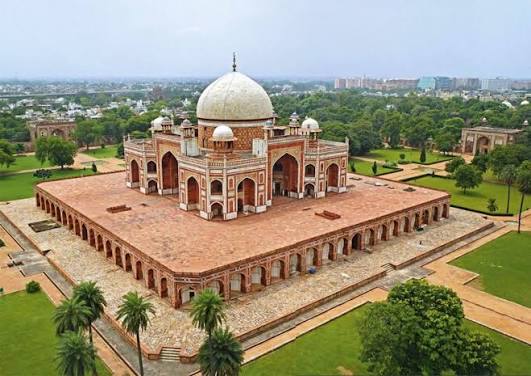
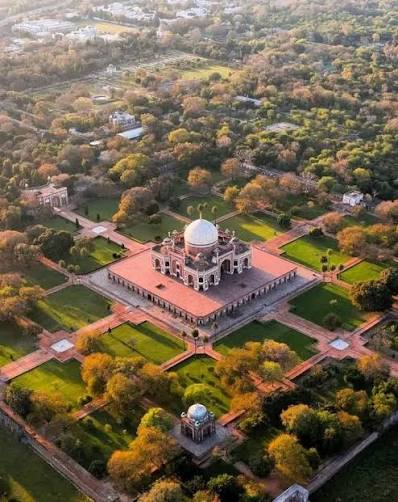
Humayun’s Tomb occupies an important position in the history of Mughal architecture because of its garden-tomb design and Persian architectural influence. It is commonly regarded as the first major garden tomb on the Indian subcontinent. The monument therefore becomes an important link between the earlier Islamic architectural traditions of India and the mature Mughal architectural style that developed later. Humayun’s Tomb at Nizamuddin, commissioned by his widow Hamida Banu Begum and built in the years after his death in 1556; it is the first great garden-tomb of the subcontinent and a UNESCO World Heritage Site since 1993.
For examination purposes, remember the association:
Humayun – Delhi – Bega Begum – Mirak Mirza Ghiyas – Garden Tomb
WHY IS HUMAYUN’S TOMB IMPORTANT?
1. First major Mughal garden tomb in India
It is generally regarded as the first great garden-tomb of the Mughal tradition in India.
2. Charbagh
It follows the charbagh garden concept.
Charbagh means:
Four gardens
The garden is divided into four principal sections by water channels and pathways.
3. Persian influence
The monument displays strong Persian and Timurid influences.
4. Red sandstone and white marble
It uses:
- red sandstone as the principal material,
- white marble for important architectural elements.
5. Double dome
Humayun’s Tomb represents the development of the double-dome tradition.
6. Raised platform
The tomb stands on a large elevated platform.
7. UNESCO World Heritage Site
Humayun’s Tomb is a UNESCO World Heritage Site.
Akbar’s Tomb
Location: Sikandra, near Agra
Emperor: Akbar
Construction: Begun during Akbar’s reign
Completed: by his son Jahangir
Completed around: 1613
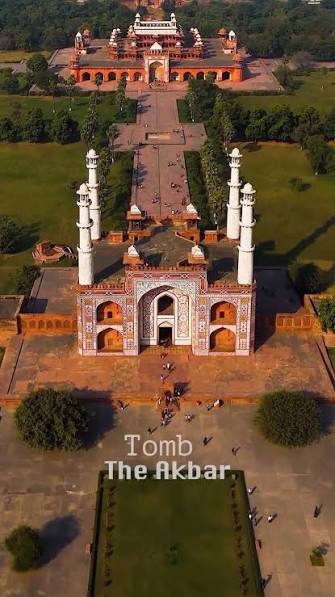
The Tomb of Akbar is situated at Sikandra near Agra in Uttar Pradesh. Its construction was completed by Akbar’s son Jahangir during 1605–1613.
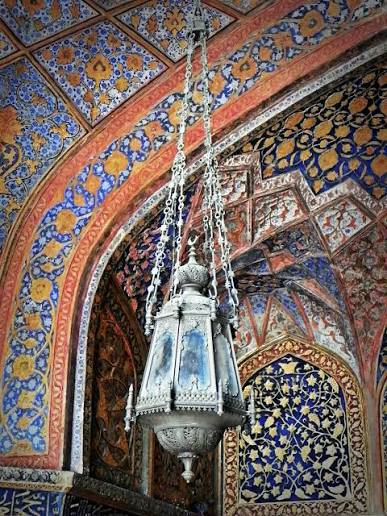
The tomb is architecturally distinctive because of its four-tiered pyramidal form. The upper portion contains a marble pavilion with a false tomb, while the actual burial is in the basement. The structure is predominantly constructed of red sandstone, with extensive use of white marble and decorative inlay. Geometrical, floral and calligraphic designs are also found on the monument.
The most important examination association is:
Akbar – Sikandra – Pyramidal Tomb – Jahangir completed it
Akbar’s Tomb should not be confused with Humayun’s Tomb. Humayun’s Tomb is in Delhi, whereas Akbar’s Tomb is at Sikandra near Agra.
Important Note:
Hasht-Bihisht literally means:
“Eight Paradises”
It refers to an architectural plan in which a central chamber is surrounded by eight surrounding spaces/chambers.
It became an important planning principle in Persian, Timurid and later Mughal architecture.
Important examples
- Humayun’s Tomb
- many Mughal mausoleums
- Taj Mahal
Important exception
Akbar’s Tomb at Sikandra
Tomb of Jahangir
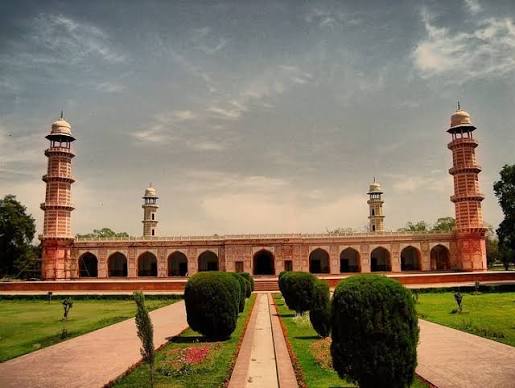
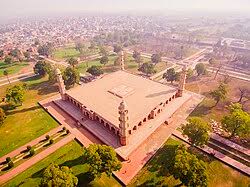
The Tomb of Jahangir is located at Shahdara Bagh in Lahore, present-day Pakistan. The mausoleum dates to 1637 and is situated near the Ravi River.
The tomb is particularly noted for its rich decorative treatment, including frescoes, marble decoration and pietra dura work. The monument forms part of a larger ensemble that also includes the Akbari Sarai and the Tomb of Asif Khan.
The easiest way to remember this monument is:
Jahangir – Shahdara Bagh – Lahore
ASAF KHAN’S TOMB
Shahdara, Lahore
Mirza Abul Hasan, known as Asaf Khan
He was the brother of Nur Jahan.
The tomb is part of the Shahdara complex along with:
- Jahangir’s Tomb
- Akbari Sarai
Jahangir’s Tomb → Lahore
Asaf Khan’s Tomb → Lahore
Taj Mahal
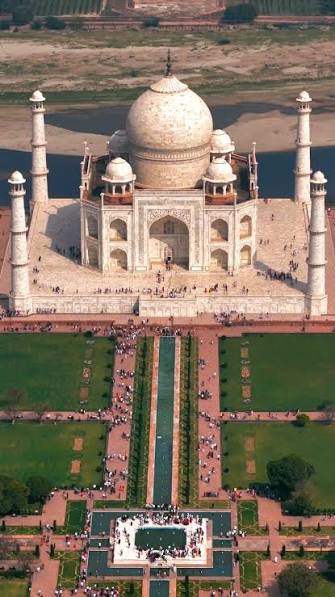
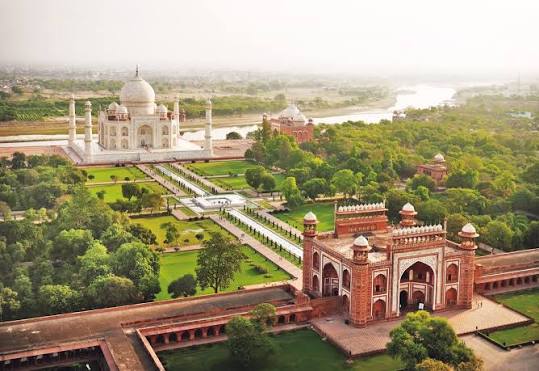
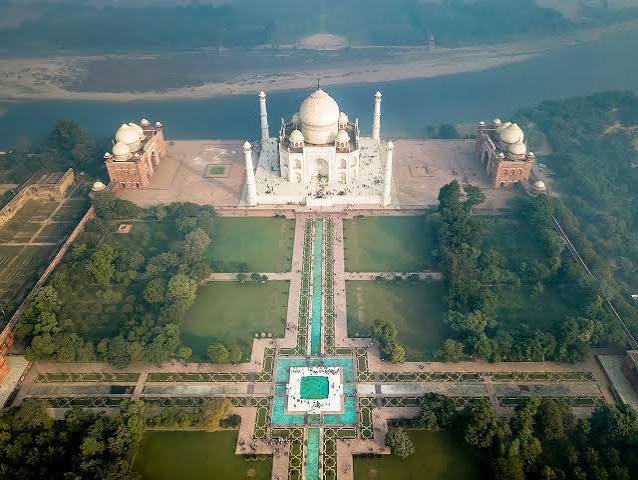
The Taj Mahal at Agra represents the finest expression of Mughal monumental tomb architecture. It was commissioned by Shah Jahan in memory of his wife Mumtaz Mahal. Construction of the principal monument took place during the seventeenth century, with the source material giving 1632–1648 for the major construction phase.
The Taj Mahal is the centrepiece of a large complex containing the mausoleum, mosque, guest house and formal gardens. It is particularly famous for its extensive use of white marble, pietra dura decoration, symmetry and formal garden planning. The monument also contains the burial places of both Mumtaz Mahal and Shah Jahan. The Taj Mahal was inscribed as a UNESCO World Heritage Site in 1983.
BASIC FEATURES OF TAJ MAHAL
1. Charbagh
The Taj Mahal complex incorporates the Persian-inspired garden tradition.
Important distinction
At Humayun’s Tomb, the tomb occupies the central position within the garden arrangement.
At the Taj Mahal, the main mausoleum is placed at the northern end of the garden near the Yamuna, with the garden extending in front.
This is an important architectural distinction.
2. White Marble
The Taj Mahal represents the high point of Mughal preference for:
White marble
3. Pietra Dura
The monument contains extensive:
Pietra dura / parchin kari
inlay work using coloured stones.
4. Central Dome
The principal dome is a large double dome.
5. Four Minarets
Four slender minarets stand at the corners of the main platform.
6. Symmetry
The entire complex is characterized by extraordinary:
bilateral symmetry
7. Calligraphy
Quranic calligraphy decorates portions of the monument.
8. Cenotaphs
The cenotaphs of:
- Mumtaz Mahal
- Shah Jahan
are located inside the main chamber.
The actual graves are in the crypt below.
Important
Cenotaph ≠ actual grave
For examinations, the essential association is:
Taj Mahal – Shah Jahan – Mumtaz Mahal – Agra – White Marble – Pietra Dura
Tomb of Aurangzeb
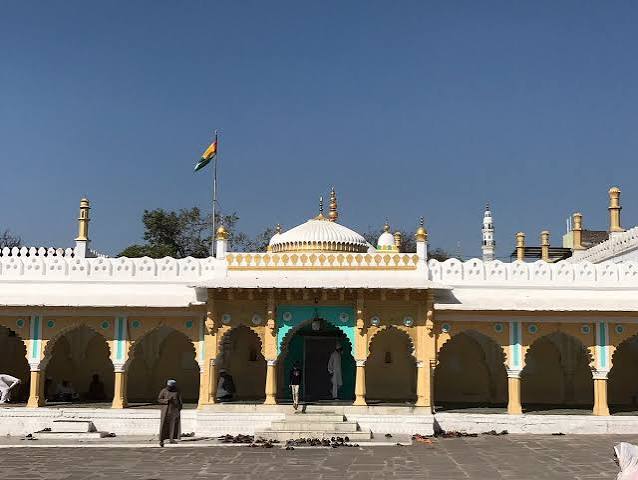
The tomb of Aurangzeb is located at Khuldabad in Maharashtra. Unlike the grand monumental tombs associated with several other Mughal emperors, Aurangzeb’s burial is notably simple.
Aurangzeb was buried in a simple, unmarked grave according to his wishes. His grave is situated within the complex associated with the dargah of Sheikh Zainuddin Shirazi. This makes the tomb particularly important for comparative questions on Mughal architecture.
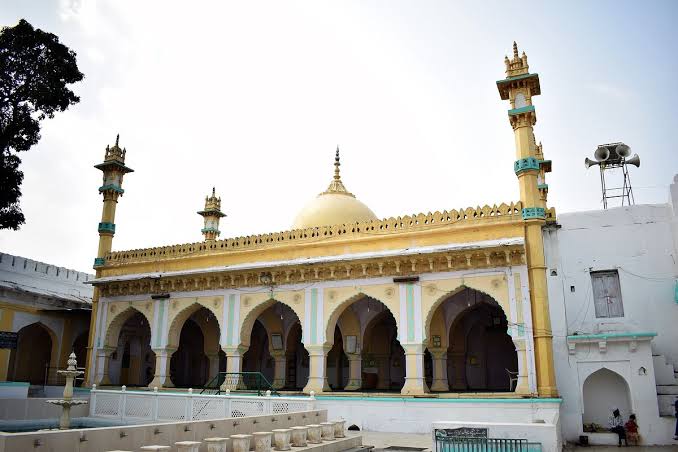
The important contrast is:
Shah Jahan – magnificent Taj Mahal
Aurangzeb – simple, unmarked grave
Tomb of Mariam-uz-Zamani
The tomb of Mariam-uz-Zamani is located at Sikandra near Agra. She was an important consort of Emperor Akbar and the tomb was constructed by her son Jahangir between 1623 and 1627.
An interesting architectural fact is that the structure was originally an open baradari constructed during the reign of Sikandar Lodi. The Mughals later converted the structure into a tomb by making a crypt below the central compartment and adding decorative elements such as frescoes and floral carvings.
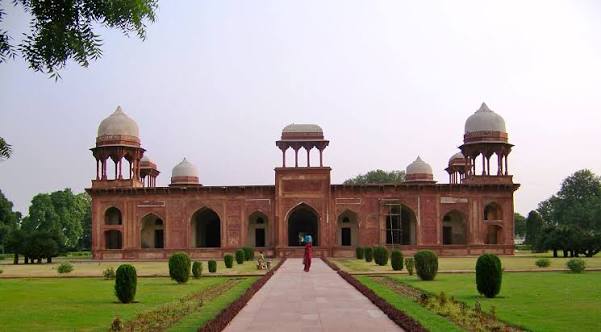
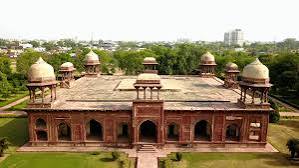
This creates an important examination distinction:
Original structure – Sikandar Lodi
Conversion into a tomb – Mughal period
Bibi Ka Maqbara
Bibi Ka Maqbara is located at Aurangabad in Maharashtra and is associated with Dilras Banu Begum, the wife of Aurangzeb. She was posthumously known as Rabia-ud-Daurani.
The monument was commissioned by Aurangzeb in memory of his wife and was constructed during the later Mughal period. Because of its striking resemblance to the Taj Mahal, it is popularly associated with the Taj Mahal tradition.
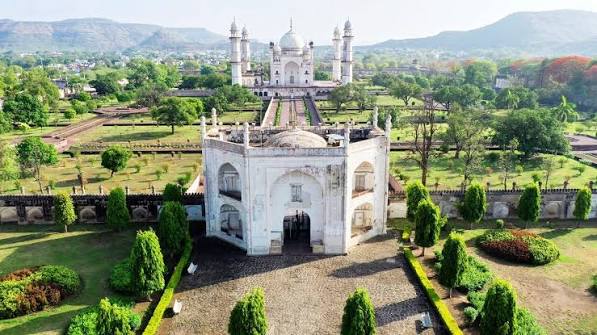
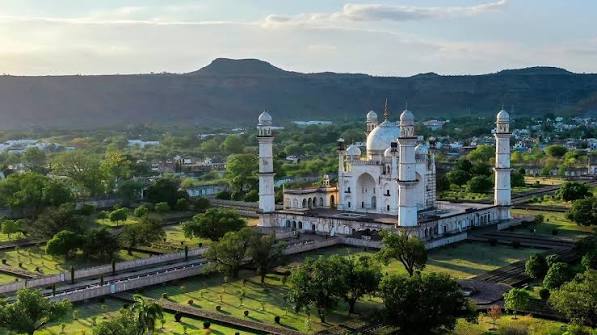
Basic facts
- Location: Aurangabad, Maharashtra
- Presently officially known as Chhatrapati Sambhajinagar
- Associated with Dilras Banu Begum
- She was the wife of Aurangzeb
- Also known as Rabia-ud-Durrani
Popular name
Taj of the Deccan
or
Deccan Taj
The most important examination association is:
Bibi Ka Maqbara – Dilras Banu Begum – Aurangzeb – Aurangabad
Tomb of Itimad-ud-Daulah
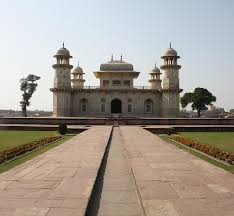
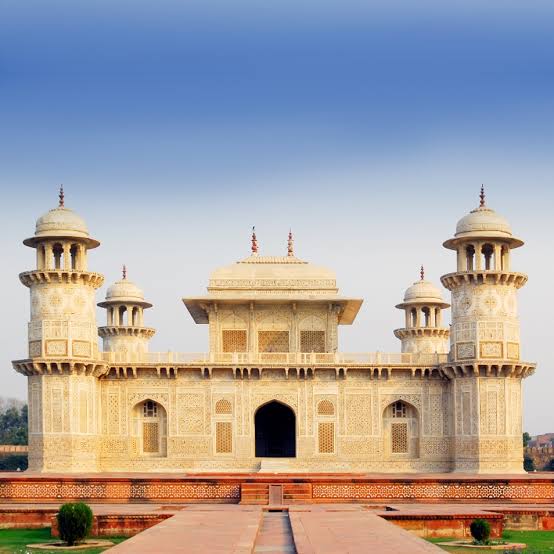
The Tomb of Itimad-ud-Daulah is located in Agra and was built for Mirza Ghiyas Beg, the father of Nur Jahan. Nur Jahan commissioned the mausoleum for her father, and construction took place between 1622 and 1628.
The monument is popularly known as the “Baby Taj” or “Jewel Box”. It is especially significant because it represents a transition in Mughal architectural design. Earlier monumental Mughal buildings, such as Humayun’s Tomb and Akbar’s Tomb, made extensive use of red sandstone with marble decoration. Itimad-ud-Daulah represents the increasing importance of white marble and pietra dura, a tradition that reached its highest expression in the Taj Mahal.
Thus, the most important relationship to remember is:
Nur Jahan → father Mirza Ghiyas Beg → Itimad-ud-Daulah → Agra
Important Note:
PIETRA DURA
Very important for Mughal tomb questions.
Meaning
Pietra dura is a decorative technique involving the inlay of coloured/semi-precious stones into marble.
It became especially famous during the reign of: Shah Jahan
The Taj Mahal is its most celebrated example.
Itimad-ud-Daulah’s Tomb is an important early Mughal example of extensive marble inlay work.
Chausath Khamba
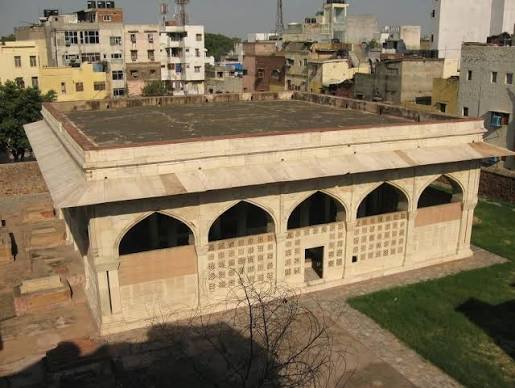
Chausath Khamba is located in the Nizamuddin area of New Delhi and was built by Mirza Aziz Koka as his mausoleum. It dates to the period of Jahangir’s reign and was constructed around 1623–24.
The name Chausath Khamba literally means “64 pillars”, referring to the architectural character of the structure. Mirza Aziz Koka was the son of Ataga Khan and had served as a governor of Gujarat under Jahangir.
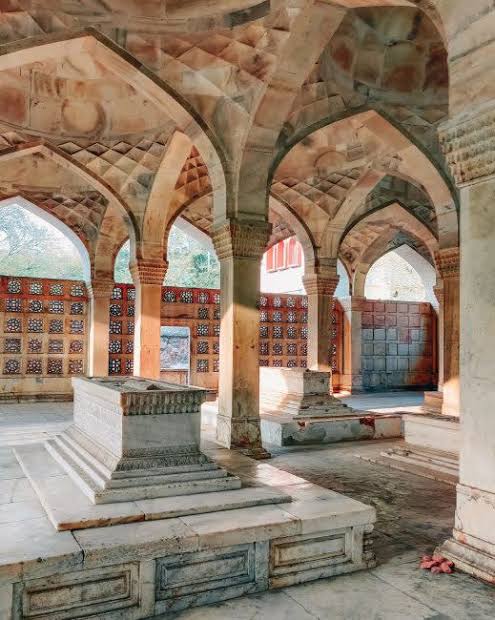
For examination purposes:
Chausath Khamba → Mirza Aziz Koka → 64 pillars → Nizamuddin, Delhi
Chini Ka Rauza
Chini Ka Rauza is situated in Agra and contains the tomb of Afzal Khan Shirazi, a scholar, poet and prime minister of Shah Jahan. The monument was built in 1635.
Its most distinctive feature is its glazed tile decoration, known as kashi or chini work. This distinctive use of glazed tiles explains the name “Chini Ka Rauza”. The monument stands on the eastern bank of the Yamuna, close to the Tomb of Itimad-ud-Daulah.
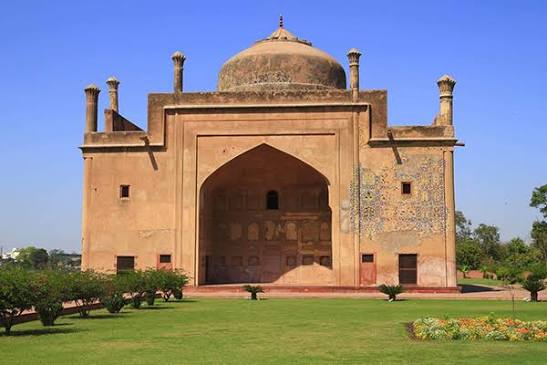
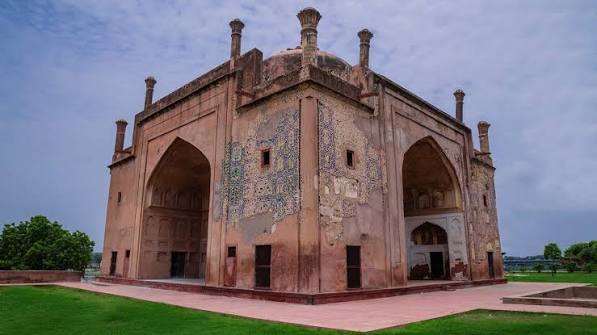
Remember:
Chini Ka Rauza → Afzal Khan Shirazi → Agra → Glazed Tile Work
Khusro Bagh
Khusro Bagh is located in Prayagraj, Uttar Pradesh. It is a large walled garden and burial complex associated with members of the Mughal royal family.
The important persons associated with the complex include Shah Begum, Khusrau Mirza and Sultan-un-Nissa Begum. Khusrau Mirza was the eldest son of Jahangir and at one stage was considered an heir to the Mughal throne. Shah Begum, originally known as Manbhawati Bai, was Jahangir’s chief consort and the mother of Khusrau Mirza.
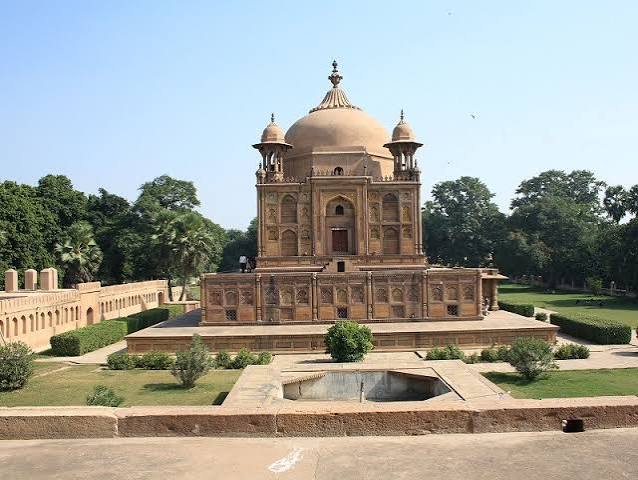
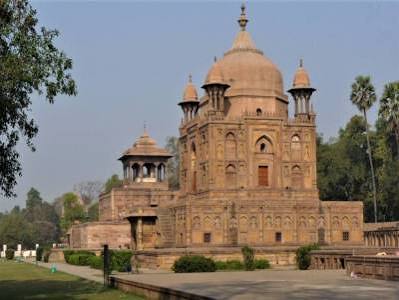
For examinations:
Khusro Bagh → Prayagraj → Khusrau Mirza
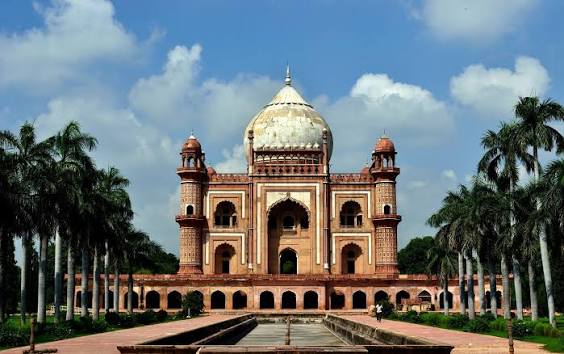
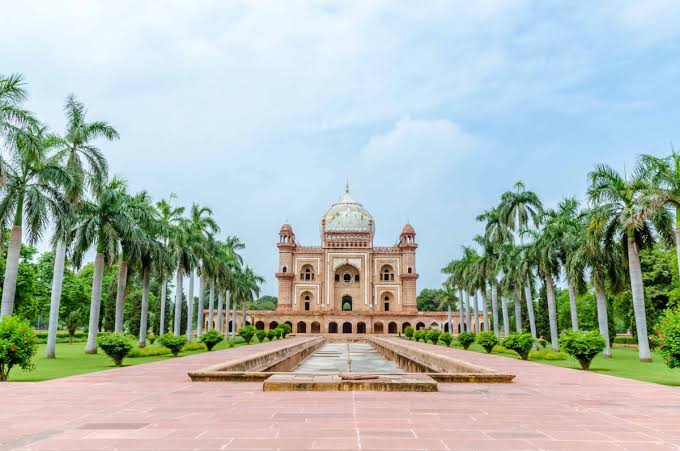
SAFDARJUNG’S TOMB
Basic facts
- Location: Delhi
- Built: 1754
- Person: Safdarjung
- Period: Later Mughal period
- Patron: Shuja-ud-Daula, son of Safdarjung
Safdarjung’s Tomb is often regarded as one of the last major Mughal-style garden tombs in Delhi.
Architectural features
- Charbagh garden
- Large central dome
- Four corner minarets
- Extensive use of sandstone and marble
- Late Mughal style
SHER SHAH SURI’S TOMB
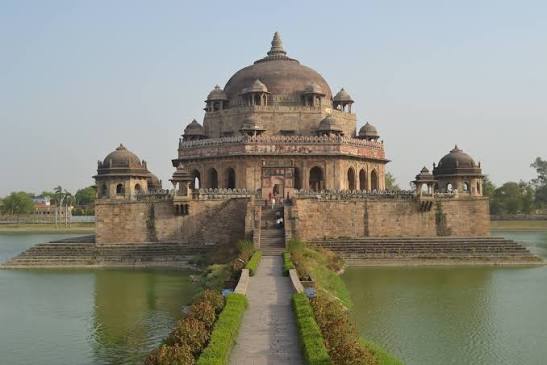
Location
Sasaram, Bihar
Person
Sher Shah Suri
Features
- Located in the middle of an artificial lake/tank
- Imposing octagonal structure
- Large dome
- Red sandstone
- Strong, massive appearance
Important exam fact
Sher Shah’s Tomb → Sasaram
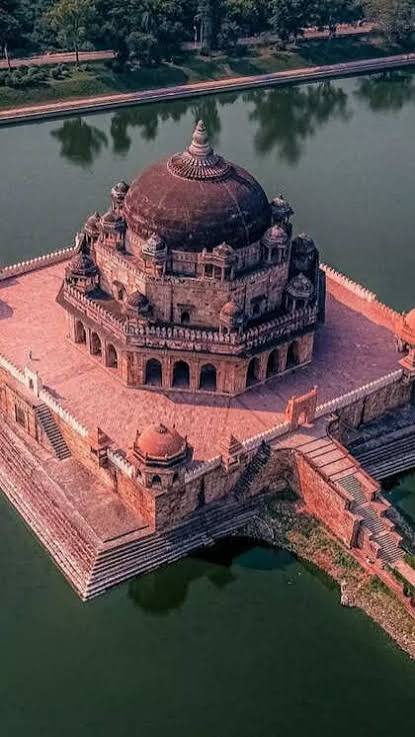
IMPORTANT TOMB–PERSON–PLACE TABLE
| Tomb/Maqbara | Person | Builder/Patron | Location | Key Feature |
|---|---|---|---|---|
| Sultan Ghari | Nasiruddin Mahmud | Iltutmish | Delhi | First Islamic mausoleum; underground octagonal chamber |
| Iltutmish’s Tomb | Iltutmish | Iltutmish | Delhi | Early Sultanate tomb |
| Balban’s Tomb | Balban | — | Delhi | True arch |
| Ghiyasuddin Tughlaq’s Tomb | Ghiyasuddin Tughlaq | — | Delhi | Sloping walls |
| Sikandar Lodi’s Tomb | Sikandar Lodi | — | Delhi | Double dome |
| Sher Shah’s Tomb | Sher Shah Suri | — | Sasaram | Tomb in lake |
| Humayun’s Tomb | Humayun | Bega Begum | Delhi | Garden tomb, charbagh |
| Akbar’s Tomb | Akbar | Akbar/Jahangir | Sikandra | Pyramidal, domeless top |
| Itimad-ud-Daulah | Mirza Ghiyas Beg | Nur Jahan | Agra | Marble + pietra dura |
| Jahangir’s Tomb | Jahangir | Shah Jahan-era | Lahore | No large central dome |
| Taj Mahal | Mumtaz + Shah Jahan | Shah Jahan | Agra | White marble, pietra dura |
| Bibi Ka Maqbara | Dilras Banu Begum | Aurangzeb/Azam Shah | Aurangabad | Taj of Deccan |
| Safdarjung’s Tomb | Safdarjung | Shuja-ud-Daula | Delhi | Late Mughal garden tomb |
PYQs
PYQ 1 — UPPCS Prelims 1992
Where is the Tomb of Akbar located?
(a) Sikandara
(b) Agra
(c) Aurangabad
(d) Fatehpur Sikri
[ANS] (a) Sikandara
[SOL] Akbar’s Tomb is situated at Sikandra, near Agra. Its construction was initiated by Akbar and completed by Jahangir.
PYQ 2 — SSC CPO 2023
The tomb of Iltutmish was built in which year?
(a) 1388 AD
(b) 1458 AD
(c) 1235 AD
(d) 1199 AD
[ANS] (c) 1235 AD
[SOL] Iltutmish’s Tomb is located in the Qutb Complex in Delhi and was constructed around 1235 CE.
PYQ 3 — SSC MTS 2024
Sultan Ghari tomb is situated to the west of the Qutub in Delhi. Its grave chamber is:
(a) Squarish
(b) Pentagonal
(c) Rectangular
(d) Octagonal
[ANS] (d) Octagonal
[SOL] Sultan Ghari’s underground grave chamber is octagonal. The tomb was built by Iltutmish for his son Nasiruddin Mahmud.
PYQ 4 — SSC MTS 2022
The “Double Dome” feature of Indo-Islamic architecture was introduced by which dynasty of the Delhi Sultanate?
(a) Slave Dynasty
(b) Lodi Dynasty
(c) Khilji Dynasty
(d) Tughlaq Dynasty
[ANS] (b) Lodi Dynasty
[SOL] The double-dome tradition is associated with the Lodi period, with the Tomb of Sikandar Lodi being the earliest surviving example commonly cited.
PYQ 5 — SSC GD 2021
The tomb of Itmad-ud-Daula is situated in:
(a) Fatehpur Sikri
(b) Shahjahanabad
(c) Aurangabad
(d) Agra
[ANS] (d) Agra
[SOL] Itimad-ud-Daulah’s Tomb is situated in Agra and was commissioned by Nur Jahan for her father Mirza Ghiyas Beg.
PYQ 6 — SSC GD 2019
“Bibi Ka Maqbara”, the replica of the Taj Mahal, is situated in:
(a) Chandannagar
(b) Aurangabad
(c) Ahmedabad
(d) Cuttack
[ANS] (b) Aurangabad
[SOL] Bibi Ka Maqbara is located in Aurangabad, Maharashtra, and is popularly called the Taj of the Deccan.
PYQ 7 — SSC MTS 2020
Which of the following monuments is also known as the ‘Taj of the Deccan’?
(a) Chand Minar
(b) Bibi Ka Maqbara
(c) Qutb Minar
(d) Mahabat Maqbara
[ANS] (b) Bibi Ka Maqbara
[SOL] Bibi Ka Maqbara resembles the Taj Mahal and is therefore popularly known as the Taj of the Deccan.
PYQ 8 — SSC Selection Post 2021
Bibi Ka Maqbara, the burial place of Aurangzeb’s wife Rabia-ud-Durrani, is an imitation of which monument?
(a) Jama Masjid, Delhi
(b) Safdarjung’s Tomb, Delhi
(c) Humayun’s Tomb, Delhi
(d) Taj Mahal, Agra
[ANS] (d) Taj Mahal, Agra
[SOL] Bibi Ka Maqbara was designed in imitation of the Taj Mahal and is therefore called the Taj of the Deccan.
PYQ 9 — SSC Stenographer 2024
Which of the following statements is incorrect about Bibi Ka Maqbara?
(a) It is an imitation of the Taj Mahal.
(b) It was built by Mughal prince Azam Shah.
(c) It is built completely with marble.
(d) It is the burial place of Aurangzeb’s wife Rabia-ud-Durrani.
[ANS] (c) It is built completely with marble.
[SOL] Bibi Ka Maqbara is not entirely made of marble. Marble is used for important portions, while other parts use basalt and lime plaster.
PYQ 10 — SSC CGL 2025
Which of the following Mughal tombs deviates from the typical square ‘Hasht-Bihisht’ layout?
(a) Humayun’s Tomb
(b) Akbar’s Tomb (Sikandra)
(c) Itimad-ud-Daulah
(d) Safdarjung’s Tomb
[ANS] (b) Akbar’s Tomb
[SOL] Akbar’s Tomb at Sikandra has a distinctive multi-storeyed pyramidal design and departs from the conventional Mughal tomb plan.
PYQ 11 — UPPSC Civil Service 2019
Arrange the following monuments in chronological order:
- Rabia Daurani’s Tomb, Aurangabad
- Sher Shah Suri’s Tomb, Sasaram
- Humayun’s Tomb, Delhi
- Atala Mosque, Jaunpur
(a) I, II, IV, III
(b) IV, II, III, I
(c) II, I, III, IV
(d) III, IV, II, I
[ANS] (b) IV, II, III, I
[SOL]
Atala Mosque → 1408
Sher Shah’s Tomb → 16th century
Humayun’s Tomb → 16th century
Rabia Daurani’s Tomb → 17th century
Therefore:
IV → II → III → I